
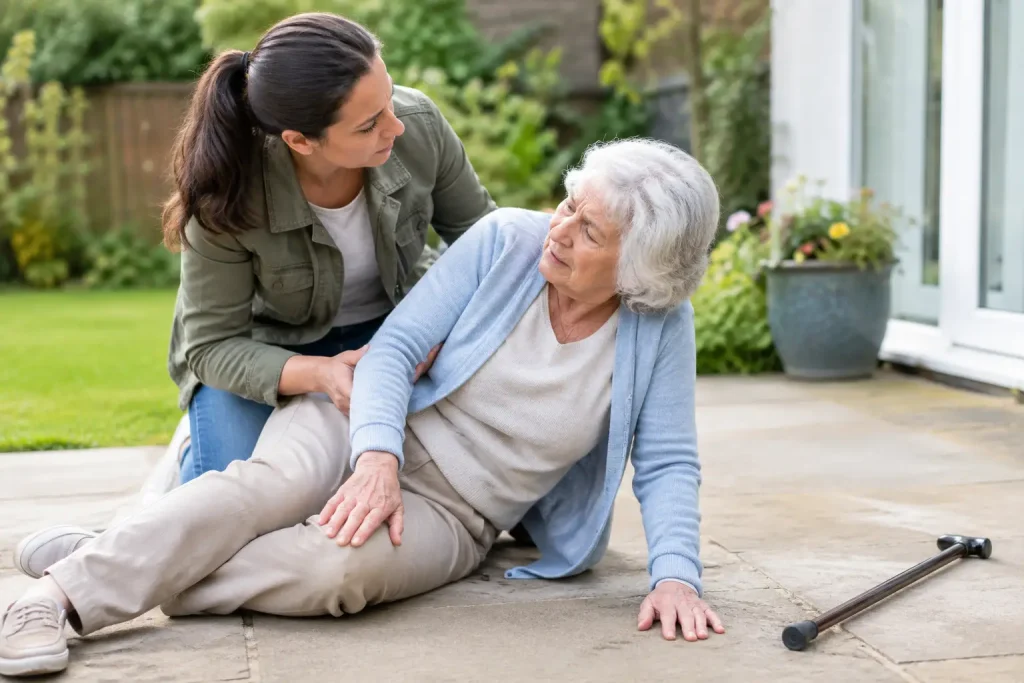
A fall can turn an ordinary afternoon into a frightening moment for everyone involved. Knowing what to do after an elderly person falls can help you act calmly, protect their dignity and avoid making an injury worse. The first priority is not getting them back on their feet quickly. It is checking that they are safe and getting the right help.
Start by checking for an emergency
If you find someone on the floor, speak to them gently and ask what happened. Check whether they are awake, able to answer clearly and breathing normally. Ask where they feel pain, whether they hit their head and whether they can move their arms and legs.
Call 999 straight away if they are unconscious, not breathing normally, have severe bleeding, severe pain, a suspected broken bone, or signs of a serious head, neck, back or hip injury. Sudden weakness, facial drooping, confusion, trouble speaking or a severe headache may also need emergency help, particularly if a stroke could be involved.
Do not move them if they have pain in their neck, back, hip or leg, unless they are in immediate danger. Moving someone with an injury can cause further harm. If they are awake and comfortable where they are, stay with them, reassure them and wait for professional advice.
A head injury deserves particular care. Seek urgent medical advice if they hit their head, even if they seem well initially, especially if they take blood-thinning medicine or develop vomiting, drowsiness, worsening headache, confusion or changes in behaviour. If you are unsure how serious a fall may be, call NHS 111 for guidance.
Help safely while you wait
Being on the floor can be uncomfortable and distressing. Cover the person with a blanket or coat if they are cold, but avoid moving them unnecessarily. If possible, place a cushion under their head only if this does not require you to shift their position. Keep the room quiet and ask someone else to make calls, unlock the door for an ambulance or bring their medication list if needed.
Avoid trying to lift them manually. Even a well-meaning attempt to pull someone up by their arms can injure their shoulder, strain your back or worsen an undetected fracture. A person may say they are fine because they feel embarrassed or do not want to cause a fuss. Take their discomfort seriously.
If they appear uninjured and want to get up, encourage them to pause first. They should only try to rise if they feel steady, have no pain and can do so using a stable piece of furniture. A simple approach is to roll onto their side, move onto hands and knees, crawl towards a sturdy chair, place both hands on the seat and bring one foot forward into a kneeling position before standing. Stay close without pulling them.
This is not appropriate after a suspected injury, a head impact with concerning symptoms, dizziness, chest pain or sudden weakness. In those circumstances, wait for clinical advice.
Once they are up, do not assume the incident is over
A person can seem settled after a fall and still develop pain, bruising or stiffness over the next few hours. Help them sit somewhere safe and check again how they feel. Look for swelling, skin breaks, difficulty walking, new limping, confusion or a change in their usual movement.
Offer a drink if they are fully alert and able to swallow normally, but do not give food, drink or medication to someone who is drowsy, confused or awaiting urgent treatment. Keep an eye on them for the rest of the day, and follow any advice from emergency clinicians, NHS 111 or their GP practice.
Write down what you know while it is fresh: the time of the fall, where it happened, whether they hit their head, what they were doing beforehand, any symptoms and what help was given. This information can be useful for a clinician and can reveal patterns if there have been previous falls.
Why did the fall happen?
Falls are rarely explained by one thing alone. A loose slipper or poorly placed footstool may be part of the picture, but it is worth considering what changed around the time of the fall. Were they rushing to the toilet? Had they eaten and drunk as usual? Were they recovering from an illness, feeling dizzy on standing, or struggling more with their balance than they had admitted?
Some causes need clinical review. New dizziness, fainting, repeated falls, changes in vision, sudden confusion or a noticeable decline in strength should be discussed with a GP or another relevant health professional. Medication can sometimes contribute to unsteadiness, but no medicine should be stopped or altered without professional advice.
A practical review of the immediate environment also helps. Look at lighting on the route to the bathroom, trailing cables, uneven thresholds, slippery floors and footwear that no longer fits securely. It may be safer to keep commonly used items within easy reach rather than requiring repeated trips up and down stairs. Small changes can reduce risk, but they cannot replace support where someone now needs help to move safely.
When a fall changes the support needed at home
One fall does not automatically mean someone can no longer live independently. Many people recover well after appropriate treatment and a few sensible adjustments. The concern grows when a fall exposes a gap between what a person needs and the help available at key moments of the day.
For example, someone who is steady after a leisurely breakfast may be much less safe when getting washed, transferring in and out of bed or walking to the toilet at night. A relative may be able to visit daily, but may not be present when mobility is most difficult. Repeated near-falls, a growing fear of walking alone, missed meals because the kitchen feels too far away, or reluctance to use the stairs are all signs that more consistent help may be needed.
Support should preserve choice rather than take it away. It may involve assistance with safe transfers, personal care, preparing meals, reminders, companionship and encouragement to keep moving within safe limits. For a person with a progressive condition or a recent reduction in mobility, having someone nearby can also reduce the pressure on family members who are trying to respond to every concern from a distance.
Live In Care Ltd is a family-owned, CQC-regulated live-in care company that provides fully managed care for people who need substantial support to remain at home. After a fall, a careful conversation about daily routines and the times when help is needed can be more useful than focusing only on the incident itself.
A calm conversation can prevent the next crisis
Many older people worry that admitting a fall will lead to unwanted changes. Approach the subject with respect. Rather than saying, “You cannot manage on your own,” ask, “Which parts of the day feel less certain since the fall?” This makes space for an honest answer without undermining their confidence.
It may help to agree on a simple plan: who they will contact if they feel unwell, where they will keep a phone or alarm, which activities they should not attempt alone for now, and when they will seek medical advice. If family members are involved, make sure everyone understands the plan so that responsibility does not fall silently on one person.
A fall is unsettling, but it can also provide useful information. Responding with patience, prompt medical advice where needed and the right level of day-to-day support can help someone feel safer without losing sight of the life they want to continue living at home.