
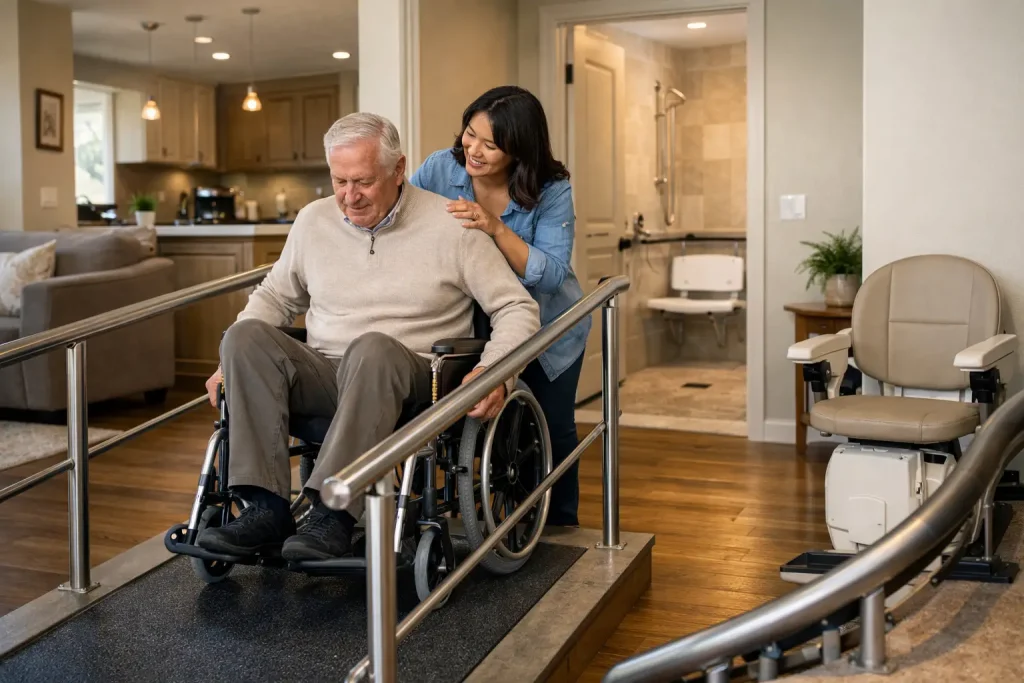
A doorstep that is awkward in wet weather, a bath that now feels too high, or a narrow route between the bedroom and bathroom can change the shape of someone’s whole day. For a family member whose mobility is reducing, home adaptations for reduced mobility are not simply about preventing falls. Done thoughtfully, they can help a person keep making ordinary choices without needing to ask for help at every turn.
The most useful changes begin with the person’s actual movements, rather than a catalogue of equipment. Notice where they pause, hold on to furniture, avoid certain rooms, or plan their day around a single difficult step. These details reveal what needs attention first.
Begin with the journeys that happen every day
Think through a typical day from getting out of bed to going to sleep. The aim is not to remove all challenges from the home. It is to make essential journeys more predictable, less tiring, and easier to manage safely.
The route from the bedroom to the bathroom is often the best place to start. Is there clear space beside the bed for someone to stand, turn, or use a walking aid? Are rugs slipping or curling at the edges? Does the route have enough light before daylight or late at night? Small changes such as securing loose flooring, moving a low table, and adding well-positioned lighting can make a noticeable difference without altering the character of the house.
It also helps to consider how someone carries things. A person using a frame may not have a free hand for medication, a phone, laundry, or a plate of food. A bag designed for and securely fitted to the person’s walking aid, another professionally recommended carrying solution, or relocating frequently used items may reduce unnecessary trips and awkward balancing.
Do not assume that a larger adaptation is always the right first answer. A stairlift may be valuable for one person, for example, but another may benefit more from moving essential belongings to one floor or adapting a downstairs room. The right choice depends on strength, balance, fatigue, the layout of the home, and how needs are likely to change.
Ask for an Occupational Therapy Assessment
Before buying expensive equipment or arranging structural work, consider requesting a home assessment through the local authority’s adult social care service. An occupational therapist can observe the everyday activities that are becoming difficult and recommend equipment or adaptations suited to the person, their abilities, and the layout of the property.
This is particularly important where the person needs help with stairs, bathing, transfers, getting in and out of bed, or using mobility equipment. A product that works well for one person may be unsuitable or unsafe for another, especially where mobility is changing after a stroke or because of a progressive condition.
Relatives and carers should follow professional moving-and-handling and equipment guidance rather than improvising techniques around a new rail, seat, trolley or walking aid.
Make entrances easier before they become a barrier
An entrance should allow someone to come and go with dignity, whether they are walking independently, using a wheelchair, or being supported by another person. Pay attention to thresholds, steps, door widths, outside lighting, and the space needed to open the door while holding a mobility aid.
A single raised threshold can be difficult for a shuffling gait or wheels. In some homes, a threshold ramp or altered door sill may help. In others, a handrail on the approach, a clearly marked step edge, and improved lighting will be enough. Any external ramp needs to be properly designed for the available space and gradient, rather than added as a quick fix.
Look beyond the front door too. Access to a driveway, bin store, post box, or a place where a taxi can stop may affect how practical the home remains. These are easy details to overlook until an appointment or family visit becomes harder than it needs to be.
The bathroom usually deserves early attention
Bathrooms combine hard surfaces, water, transfers, and limited space. They are therefore often where a person first loses confidence, even if they manage well elsewhere.
A few changes may be sufficient when mobility is only mildly reduced. Following an appropriate assessment, options such as a raised toilet seat, correctly positioned grab rails, or a suitable shower seat may make standing, sitting, and washing less demanding. The position of each item matters. A rail placed too far away or at the wrong height may encourage unsafe stretching rather than provide support.
Where getting into the bath is becoming difficult, an over-bath shower may no longer be a practical answer. A level-access or low-threshold shower can offer a safer route, particularly for someone using a shower chair or needing support from a family member or carer. However, this is a more significant alteration and needs careful planning around drainage, waterproofing, ventilation, and the person’s likely future needs.
Privacy matters as much as physical safety. Consider whether towels, toiletries, continence products, and clean clothes can be reached without bending or twisting. A bathroom that supports someone in managing personal care with less assistance can protect confidence as well as comfort.
Adapt the kitchen for energy, not just reach
A kitchen can be workable on paper yet exhausting in practice. Reduced mobility may mean that standing for ten minutes at a worktop, bending into a low cupboard, or carrying a hot pan across the room is no longer realistic.
Start by bringing daily essentials between waist and shoulder height. Frequently used crockery, food, pans, and cleaning items should not require crouching, stretching, or climbing. A suitable perching stool may help with tasks that are safer when completed sitting, provided it has been recommended or checked for the person’s balance, strength, and kitchen layout.
The appliance layout may matter more than a complete refit. A kettle tipper or lighter kettle may be useful, but only if it fits the person’s grip and strength. A microwave placed at a comfortable height can be safer than lifting hot food from a low oven. For someone with limited hand control, lever taps and easy-grip handles may reduce strain.
There is a balance to strike. Removing every task from a person’s day can leave them feeling excluded from their own household. The better question is: which parts of preparing food still feel enjoyable and manageable, and which have become tiring or risky?
Home adaptations for reduced mobility should allow for support
Families sometimes plan adaptations only around what their relative can do alone. It is equally worth considering what happens when help is needed. There may need to be enough turning space for two people in the bathroom, a clear approach to the bed, or room for a mobility aid beside a chair.
Avoid filling key areas with extra furniture or storing boxes on landings and stairs. A clear route is safer for everyone and makes assistance calmer and more dignified. If a person needs help transferring from bed to chair, equipment must be chosen and positioned by someone who understands both the home and the individual’s abilities.
An occupational therapist can offer practical advice on daily activities and may recommend suitable equipment or alterations. Their input is particularly valuable where a person’s mobility has changed after a stroke, with Parkinson’s, or following a period of illness, because needs can be more complex than they first appear.
Check What Funding May Be Available
Before paying privately for adaptations, ask the local authority whether an assessment or financial support is available. In England, minor adaptations costing £1,000 or less may normally be provided free following an appropriate assessment. These can include items such as grab rails, small ramps, or improved external lighting.
Larger alterations may qualify for a Disabled Facilities Grant. This can help with work such as widening doors, installing ramps, improving access to essential rooms, fitting a stairlift, or creating a level-access shower. Eligibility and the amount awarded depend on the circumstances, and adult applications are normally means-tested.
Apply before building work begins, because work already started may not be eligible. Planning permission, building-regulation approval or a landlord’s consent may also be required for some alterations.
Know when a change in support is needed too
Adaptations can reduce effort and improve safety, but they cannot replace human support where someone needs regular help with moving around, washing, meals or medication. Nor should a family feel that every difficulty must be solved by altering the property.
For some people, a combination works best: sensible changes to the home alongside consistent help with the parts of the day that remain difficult. This can be especially reassuring when mobility varies from one day to the next, or when relatives are trying to help around work and family commitments.
Live In Care Ltd is a family-owned, CQC-regulated live-in care company that supports people to remain at home with one-to-one, fully managed care. When mobility needs are substantial, a live-in carer can support the person to use their adapted home in accordance with the agreed care plan and relevant professional guidance. The carer can assist with everyday routines and report changes, but should not prescribe equipment or introduce unassessed transfer techniques.
A measured way to decide what comes first
Before buying equipment or arranging building work, write down the three situations that cause the most difficulty each week. They may be getting safely from the bedroom to the bathroom, leaving the house for appointments, or preparing a simple meal without exhaustion. Addressing these first gives the clearest benefit.
Then reassess after each change. If someone stops using an adaptation because it feels uncomfortable, confusing or too demanding, it may need repositioning or replacing. A home should adapt around the person, not ask the person to struggle to fit a solution.
Start with one route, one room, and one repeated difficulty. Seek appropriate advice, make the smallest effective change, and then review whether the person actually uses it comfortably. The aim is not to fill a home with equipment. It is to remove the barriers that most restrict everyday life.