
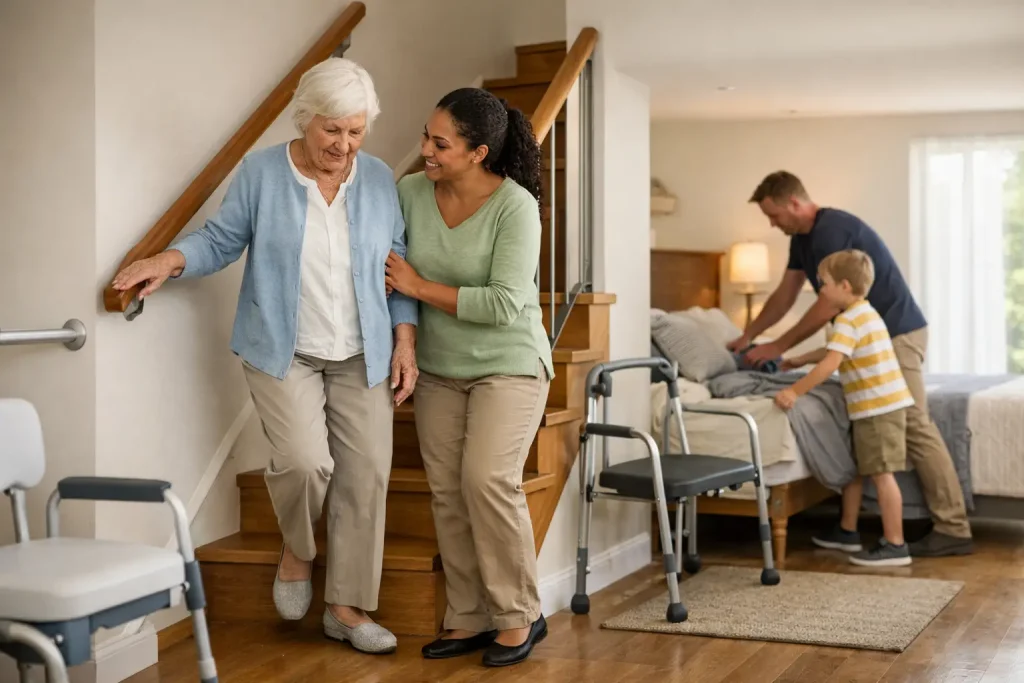
A spare room is only one part of preparing home for live-in care. The more useful question is whether the home can support two people to live and work together comfortably: the person receiving care remains in control of daily life, while the carer has a safe, private base from which to provide reliable support.
For families arranging care after a change in mobility, a progressive condition or a period of increasing reliance on relatives, this can feel like a great deal to organise. Most homes do not need major alterations. What matters is identifying the small practical issues that could make everyday tasks harder, less private or less safe once care begins.
Start with the person, not the house
Before moving furniture or buying equipment, talk through what a typical day currently looks like. Consider where support is most needed: getting washed and dressed, moving between rooms, preparing meals, remembering medication, managing stairs, or responding when someone feels unwell.
This conversation should also cover what the person wants to continue doing for themselves. A live-in carer is there to support independence, not take over. Someone may still prefer to choose their clothes, prepare part of a meal, answer their own telephone or manage correspondence. Knowing these preferences helps ensure any changes to the home are proportionate.
It can be helpful to walk through the house together at the times that tend to be most difficult. For example, a narrow route from the bedroom to the bathroom may be manageable in daylight but less so during the night. A kitchen worktop may be the right height for sitting tasks, while a heavy internal door may make moving between rooms tiring or frustrating.
Preparing your home for live-in care: the essentials
The carer needs their own furnished bedroom with a proper bed, storage for belongings and a space where they can rest privately between working periods. It does not need to be large or newly decorated, but it should be clean, warm, secure and genuinely available to them. A room used mainly for storage or regular visitors is unlikely to work well.
A separate bathroom is helpful where possible, but it is not always essential. What matters is agreeing a practical routine that respects everyone’s privacy and allows the carer to maintain normal personal hygiene.
Reliable heating, hot water, lighting and internet access are also important. Internet access may be needed for communication and care-related systems, but it should not be treated as a substitute for clear household arrangements. Show the carer how the heating controls, cooker, washing machine and any alarm systems work, rather than assuming they will be obvious.
If there are pets, decide in advance who is responsible for feeding, walking, cleaning up after them and arranging veterinary visits. Many carers are comfortable around animals, but caring for a pet should not be assumed to be part of their role without prior agreement. This avoids disappointment and keeps the focus on the person’s care needs.
Agree how the carer’s meals, kitchen use, grocery arrangements and household supplies will be managed. These details should be discussed before the placement begins rather than assumed by either the family or the carer.
Make the routes through the home easier to use
You do not need to turn a family home into a clinical setting. However, clear and usable routes reduce the chance of trips, rushed manoeuvres and daily strain.
Look particularly at hallways, stairs, entrances and the journey between the bedroom, bathroom, kitchen and sitting room. Remove loose mats that slide, trailing cables, unstable side tables and boxes left on the floor. Ensure commonly used areas have good lighting, including landings and outside steps. Motion-sensitive lights can be useful in places where finding a switch is difficult.
Furniture may need moving if it creates a tight turn for a walking frame, wheelchair or a person being supported at the elbow. This is often a simple adjustment, not a wholesale rearrangement. Keep frequently used items within reach so that neither the person nor the carer has to stretch, climb or bend unnecessarily.
Check Fire Safety, Access and Household Technology
Before care starts, test smoke and carbon monoxide alarms, keep escape routes clear and explain how doors, locks, alarms and emergency access work. Agree how keys will be managed and where the carer can park if they will use a vehicle.
If the home has CCTV, a video doorbell, smart speakers, audio monitoring or other recording equipment, disclose this before care begins and agree how it will be used. Monitoring should respect the privacy and dignity of everyone in the household and should never intrude into the carer’s private bedroom or bathroom.
Pay close attention to the bathroom
Bathrooms deserve a careful look because surfaces are often wet and people may feel less steady when transferring in and out of the bath, shower or toilet. Following an appropriate assessment, options such as non-slip flooring, correctly positioned grab rails or a suitable shower seat may make personal care safer and less tiring. Avoid loose bathroom mats that could create an additional trip hazard.
Avoid making changes based only on what worked for somebody else. The right equipment depends on mobility, strength, balance and the layout of the room. If there is any uncertainty, seek appropriate professional guidance before fitting permanent equipment.
Create a calm, workable kitchen routine
The kitchen is not simply where meals are prepared. It is often where medication is stored, household supplies are kept and daily decisions are made. A little organisation can prevent confusion.
Set aside clear space for the food that is regularly used, and check that appliances are working safely. Explain any habits that matter, such as allergies in the household, food that should not be moved, or separate arrangements for religious or cultural dietary needs.
If the person receiving care has particular eating or drinking requirements, write down the guidance already provided by the relevant health professional. Do not rely on relatives passing information on verbally, especially if several people are involved. Clear, current instructions are safer and less stressful for everyone.
Agree boundaries before they become awkward
A live-in carer is a professional working in someone’s home, but they are also sharing the household environment. The best arrangements make room for dignity on both sides.
Discuss practical points before care starts: which rooms are private, whether family members can enter the carer’s room, where post should be placed, how household shopping is handled and who may visit. If relatives use a key or let themselves in, agree how they will announce their arrival. This can feel minor at first, but it protects the person receiving care from being overwhelmed and gives the carer the privacy needed to rest.
It is equally useful to decide how information will be shared. One relative may be the main contact, while other family members receive updates at agreed times. This prevents the carer having to repeat the same information and avoids mixed messages about day-to-day decisions.
Put vital information where it can be found
In an urgent situation, the carer should be able to locate key details without searching drawers or phoning several relatives. Keep necessary information securely in an agreed location that the carer can access when required. Only include information relevant to the care arrangement and review it whenever medication, contacts or emergency procedures change.
A simple folder can include:
- emergency contacts and the preferred order for calling them
- GP, pharmacy and relevant clinical contact details
- current medication information and repeat prescription arrangements
- details of allergies, communication needs and mobility equipment
- the location of utility shut-off points, fuse box, keys and alarm instructions.
This is not about making the home feel formal. It gives the person receiving care and their family confidence that the right information is available when it matters.
Allow time for a settling-in period
The first few days are usually about learning the rhythm of the household. A carer may need to understand where everyday items are kept, how the person likes support offered and which routines are fixed versus flexible. Families can help by being available for questions without trying to direct every interaction.
Expect a few adjustments. Perhaps the carer’s room needs another lamp, a cupboard is not easily accessible, or a regular delivery needs to be redirected. These are normal practical refinements, not signs that the arrangement is failing.
Live In Care Ltd is a family-owned, CQC-regulated live-in care company providing fully managed care across England. Before care begins, our team discusses the home environment, carer accommodation, access, routines, pets, equipment and household arrangements so that practical issues can be addressed in advance. Ongoing communication then allows questions or changes to be resolved as the arrangement develops.
The aim is not a perfect house. It is a home where the person can continue living the life they choose, with enough space, clarity and support for care to be delivered respectfully each day.