
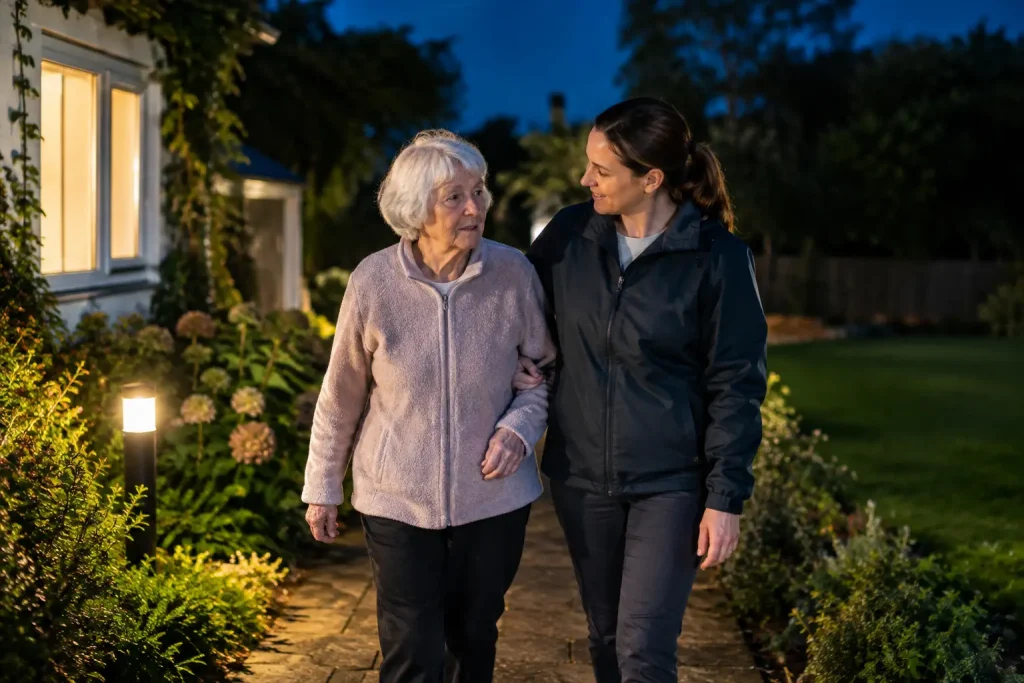
A person may get dressed at 2am, try the front door or walk from room to room looking for someone. Dementia wandering at night can be distressing for the person and exhausting for relatives who are trying to keep them safe while managing their own sleep and responsibilities.
Although this is often described as “wandering”, the movement may have a clear purpose for the person. They might be searching for the bathroom, responding to discomfort or trying to follow a routine that feels familiar.
Understanding what they may need is a useful starting point. The aim is to respond calmly, reduce avoidable risks and arrange enough support without unnecessarily taking away their freedom or choices.
Why do people with dementia walk about at night?
Dementia can affect the body’s sleep–wake rhythm. Someone may sleep more during the day, wake overnight or become unsure whether it is morning or evening.
They may get dressed because they believe it is time for work, look for a family member or feel that they need to return to a previous home. The feeling behind this can be urgent and real to them.
There may also be an immediate physical need. Toileting, pain, thirst, uncomfortable clothing or a room that feels too hot or cold can disturb sleep. Noise, shadows or difficulty recognising the surroundings may add to the confusion.
Alzheimer’s Society explains more about how dementia can affect sleep. Each person’s experience is different, so it helps to look at what is happening rather than assume that every unsettled night has the same cause.
When a change needs medical attention
If night waking is new, becoming more frequent or causing distress, speak to the person’s GP or dementia team. Pain, constipation, illness or medication effects may need assessment.
A pharmacist can advise on medication questions, but do not stop, change or add medicines or sleep remedies without appropriate professional advice.
Sudden confusion, or a sudden marked worsening of the person’s usual confusion, needs immediate medical assessment. Do not assume it is simply their dementia becoming worse.
The NHS advises going to A&E or calling 999 when someone suddenly becomes confused. Explain what has changed from the person’s usual behaviour and follow the advice given.
A record of difficult nights can help with a planned review, but collecting information must never delay urgent help.
Respond calmly and look for the immediate need
Approach gently, use the person’s name and make sure they know who you are. Keep your voice calm and allow time for them to respond.
Check whether they need the toilet, feel uncomfortable or want reassurance. Offer simple choices rather than asking several questions at once.
If the person says they need to leave for work or catch a bus, an argument about the time may increase their distress. Acknowledge the feeling without making a promise you cannot keep. For example:
“I can see this feels important. I’m here with you. Shall we sit down and talk about where you want to go?”
Once they feel more settled, a familiar conversation, quiet activity or help with the underlying need may make it easier to return to bed.
Walking itself is not always a problem. Where it is safe and appropriate, accompanying the person for a short walk around a clear indoor route may be more comfortable than repeatedly insisting that they sit or lie down. Follow any assessed mobility guidance and seek help if you cannot support them safely.
Make night-time routes easier to navigate
Review the routes the person actually uses, particularly between the bedroom and bathroom.
Provide enough gentle lighting to see clearly without creating confusing shadows or glare. Clear loose rugs, trailing cables and low furniture from walking routes.
Keep an assessed walking aid within reach if the person uses one, and ensure those supporting them understand how it should be used. A walking aid should not replace assistance that the person has been assessed as needing.
A clear toilet sign or familiar picture may help someone recognise the bathroom. Consider whether a particular doorway, reflection or poorly lit corner is causing confusion.
Make changes with the person wherever possible. An unfamiliar layout can create new difficulties, even when the intention is to make the home safer.
Use door alerts as part of a response plan
Door sensors and movement alerts may help identify when someone is moving towards an exit. However, an alarm does not provide supervision or assistance by itself.
Before relying on an alert, agree who will receive it, whether they can respond promptly and what happens if they are unavailable. Consider what happens during a power failure or loss of connection too.
Our guide to dementia technology explains the difference between detecting an event and having someone available to help.
Discuss monitoring openly, including privacy and the person’s preferences. If there are concerns about their ability to make a particular decision, seek appropriate professional advice.
Do not lock someone in alone or use barriers that prevent safe escape in a fire. Emergency exits must remain usable. Before making changes that restrict the person’s freedom to leave, speak to adult social care and the care team about an individual safety plan.
Alzheimer’s Society provides further guidance on supporting a person with dementia who walks about, including considerations around doors and safety.
What if the person leaves home and cannot be found?
Contact the police promptly and explain that the missing person has dementia. You do not need to wait 24 hours.
Call 999 if they may be at immediate risk of harm—for example, if they are missing outdoors at night, disorientated and unable to keep themselves safe. For a non-emergency missing-person report, contact the police on 101.
Do not delay reporting while carrying out a prolonged search. Share a recent photograph, what the person is wearing, where they were last seen and any relevant health or mobility needs.
Planning ahead can help. The Herbert Protocol allows useful information about the person, their routines and familiar places to be prepared for police if they go missing. Check your local force’s arrangements.
Look for patterns and support a comfortable routine
For ongoing concerns, brief notes over several days can help the GP, dementia team or care provider understand the pattern.
Record when the person sleeps and wakes, what happens before they start walking, what they appear to need and what helps them settle. Include daytime naps, changes in routine and any symptoms.
Regular mealtimes, opportunities for daylight and enjoyable daytime activity may support a more settled sleep pattern. Activities should suit the person’s abilities and interests, with rest when needed.
A familiar bedtime routine and a comfortable sleeping environment may also help. Avoid forcing activity to make someone tired or keeping them awake when they are unwell.
Alzheimer’s Society offers practical suggestions for supporting better sleep with dementia.
These changes may help, but they do not guarantee uninterrupted nights. Persistent difficulties deserve review rather than blame.
When the family needs more overnight support
Relatives may cope for a while by sleeping lightly, taking turns to stay awake or checking the house repeatedly. When this becomes the usual arrangement, it is time to discuss whether the support is sufficient.
Seek a care review if the person repeatedly tries to leave home, needs frequent assistance, becomes distressed when alone or requires someone present to respond safely.
The family carer’s needs matter too. Repeatedly losing sleep, feeling unable to switch off or struggling to manage the following day are reasons to ask for help.
Explain what is actually happening overnight, including the assistance relatives provide quietly between planned visits. A care assessment needs an honest account of those responsibilities.
Does a live-in carer provide continuous overnight supervision?
No. A live-in carer needs planned breaks and sufficient sleep. Having a carer living in the home does not mean someone is awake and supervising throughout every night.
A sleep-in arrangement may suit occasional, brief assistance where the assessment confirms that the person can safely wait for a sleeping carer to respond.
If someone regularly wakes, walks about or needs an awake person available overnight, a separate waking-night arrangement may be required. Where continuous supervision is needed, the care plan must specify how it will be provided.
Our overnight care at home service explains sleeping-night and waking-night support.
Confirm who will respond, what cover is in place and how daytime care will continue without relying on a sleep-deprived carer. Technology and family goodwill should not be used to fill an arrangement that cannot safely meet the person’s needs.
Fully managed dementia care with Live In Care Ltd
Live In Care Ltd is a family-owned, CQC-regulated provider of fully managed live in care across England.
Our live-in dementia care service begins with understanding the person’s needs, preferences and daily routines. Overnight needs form part of that assessment, including any additional staffing required.
Our involvement continues after the carer arrives. We agree the care plan, coordinate support and review the arrangements as circumstances change. Families have a care management team to contact rather than being left to organise every adjustment themselves.
For a non-emergency discussion about dementia care and overnight support, call 0800 772 3567 or contact Live In Care Ltd.
A difficult night does not mean the person is deliberately being difficult or that their family has failed. It is a reason to understand what they may be communicating and make sure the right help is available.