
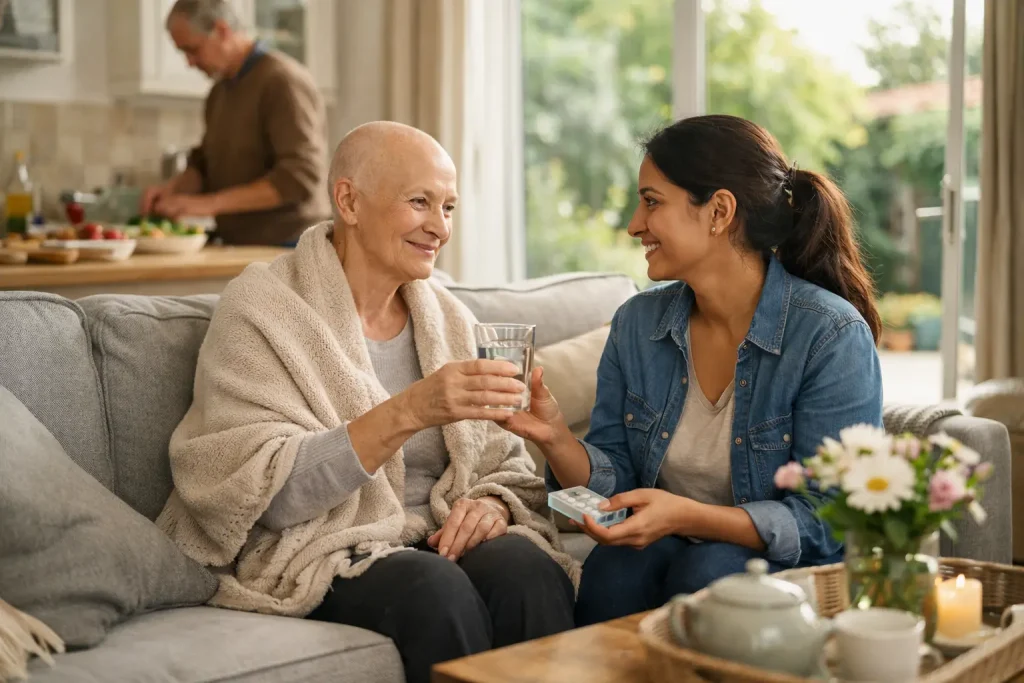
A hospital appointment can take up most of a day, even when the treatment itself is brief. There may be an early train, a long wait, tiredness on the journey home and little energy left for cooking or washing. Cancer care at home can make these demanding days more manageable, while helping the person remain surrounded by the routines, belongings and people that matter to them.
For many families, the question is not whether someone can manage every task alone. It is whether they have enough support to use their energy where it is most needed: resting, attending treatment, spending time with family or simply enjoying an ordinary afternoon at home.
When extra help at home can make a difference
Cancer affects people in very different ways. Some continue with much of their usual routine, with support needed only on treatment days. Others find that fatigue, pain, reduced mobility or nausea makes everyday tasks increasingly difficult. Needs can also change quickly between appointments, during recovery from surgery or when treatment plans alter.
Practical support may be particularly helpful when someone is returning home after a hospital stay, lives alone, or has a spouse who is doing their best but is becoming exhausted. It can also give an adult child reassurance when they live some distance away and cannot be present every day.
The aim is not to take over. Good care should protect the person’s choices and independence wherever possible. That might mean laying out clothes so they can dress themselves, preparing a familiar lunch rather than deciding what they should eat, or allowing plenty of time to get ready for an appointment without feeling rushed.
What cancer care at home can include
The right level of help depends on the person, their treatment and what is becoming difficult at home. A carer can provide personal care, such as help with washing, dressing and using the bathroom, in a way that preserves privacy and dignity. They can also support safe movement around the house, particularly when weakness or dizziness makes stairs, bathing or getting in and out of bed less steady.
Meals and drinks often need more thought when appetite is low, or tastes have changed. A carer can prepare simple food at suitable times, encourage regular drinks where appropriate and keep the kitchen stocked with familiar essentials. This is practical help rather than dietary treatment advice. Questions about nutrition, swallowing difficulties or treatment-related symptoms should always be discussed with the cancer team, GP or specialist nurse.
Support can extend to household routines that may otherwise quietly build up: changing bed linen, washing clothes, collecting prescriptions, accompanying someone to an appointment or sitting with them afterwards. These tasks can seem small in isolation. Together, they can make the difference between a home that feels restorative and one that feels like another set of demands.
Companionship matters too. Cancer can make life feel smaller, especially when a person is tired or cannot get out as easily. A familiar carer can share a cup of tea, listen without trying to fill every silence, help someone make a phone call or accompany them for a short walk if they feel able. For a person whose partner is also coping with the emotional weight of a diagnosis, this can create welcome breathing space.
Supporting treatment days without taking control
Treatment schedules can be tiring for everyone involved. A reliable routine can reduce the number of decisions that need to be made on the morning of an appointment.
For example, a carer might help someone wash and dress at an unhurried pace, make breakfast, check they have what they need for the journey and prepare something easy for later. On their return, the focus may be on comfort: a warm drink, a light meal, help settling in and a calm evening routine.
It is useful to keep practical information in one agreed place, such as appointment letters, contact numbers, a current medicines list and notes of questions the person wants to ask. The person receiving care should remain at the centre of these conversations wherever they can. A carer can help them remember and communicate what they want to raise, but does not replace clinical advice from their medical team.
There is a balance to strike. Some people want company at every appointment; others value privacy and prefer support before and afterwards. The best arrangement respects this, rather than assuming that more involvement is always better.
Knowing when to seek clinical help
A carer can notice when someone seems unlike themselves, is struggling more than usual or needs help to contact the right professional. Families may find this particularly reassuring when symptoms fluctuate or they cannot visit often.
However, home care is not a substitute for medical or nursing care. The oncology team, GP, district nurse, specialist nurse or urgent advice line should remain the source of clinical guidance. If there is a sudden or worrying change, follow the contact instructions provided by the hospital or seek urgent help as advised. It can be helpful to agree in advance who should be contacted first and who in the family should be kept informed.
Clear communication avoids the pressure falling on one relative. A brief update after a difficult day may be enough to help a daughter in another county, or a partner at work, feel informed without repeatedly worrying about what is happening at home.
Why continuity can be especially valuable
During cancer treatment, having to explain personal preferences repeatedly can be draining. Continuity of care allows a carer to understand the ordinary details that help someone feel like themselves: how they take their tea, when they prefer to rest, whether they like the curtains open in the morning, or how much conversation feels comfortable on a low-energy day.
This familiarity can be especially meaningful where personal care is needed. Dignity is often found in the small things: being offered a choice of clothes, having time to move at one’s own pace, and being supported by someone who understands what feels normal.
For couples, the value may be different. A husband or wife can remain a partner first, rather than carrying every practical responsibility alone. They may still choose to make supper, attend appointments or help with daily routines, but can do so because they want to, not because there is no other support available.
Is live-in care the right level of support?
Live-in care can suit someone whose needs are substantial, increasing or unpredictable, and who would benefit from a consistent presence at home. It may be considered after a difficult hospital discharge, when personal care is needed throughout the day, or when a family carer needs proper relief from ongoing responsibilities.
It is not the only option. Shorter visits may be enough for a person who mainly needs help with a few tasks at set times. In other circumstances, input from district nursing services, hospice teams or other professionals may be central to care. The right approach depends on the person’s wishes, the support already around them and how much help is genuinely needed.
A fully managed live-in care service, such as Live In Care, can work alongside health professionals and family members to provide day-to-day practical and personal support. The focus should remain on helping the person live the life they choose, as safely and comfortably as possible, in the place that feels most like home.
Starting the conversation with sensitivity
Many people hesitate to accept help because they do not want to feel dependent or worry that it will disrupt family life. It can be easier to begin with a specific pressure point rather than a broad question about needing care. You might ask, “Would it help if someone took the strain on treatment days?” or “What is becoming most tiring at home?”
Listen for what the person values. They may be less concerned about housework than about being able to have a proper wash independently, keep attending a weekly church service, or avoid asking their partner for help during the night. These priorities give shape to support that feels respectful rather than imposed.
Cancer can bring enough uncertainty without everyday life becoming needlessly difficult. The right help at home does not change who a person is. It can give them more space to be themselves, with familiar comforts close by and fewer practical worries competing for their energy.